If you are drawn to Falmouth, one of the first questions to answer is not just which home you want, but which part of town fits the way you actually live. In Falmouth, location can shape everything from your morning drive to your weekend routine, your maintenance checklist, and even the kind of privacy you feel at home. If you are weighing Falmouth Foreside against inland Falmouth, this guide will help you compare the daily rhythm, housing patterns, and long-term tradeoffs so you can focus your search with more confidence. Let’s dive in.
Why Falmouth Feels So Different by Area
Falmouth is not organized around one traditional downtown. According to the town’s comprehensive plan, residents have long noted the lack of a single village center, while Route 1 and Route 100 function as auto-oriented commercial corridors.
That matters because your day-to-day experience can vary significantly depending on where you live. On the east side, Falmouth Foreside is shaped by shoreline access and corridor activity. Inland Falmouth, especially around Route 1, Route 100, Winn Road, Gray Road, Blackstrap, and Hadlock, often feels more wooded, spread out, and residential in character.
Falmouth Foreside Daily Life
Falmouth Foreside often appeals to buyers who want to stay close to the water and enjoy a more active coastal setting. The area follows Foreside Road, also known as Route 88, from the Route 1 intersection toward the Cumberland line.
Daily life here is closely tied to marine access. Town Landing, located off Foreside Road, is the town’s primary public boating facility and the largest recreational anchorage and mooring field north of Marblehead, with roughly 1,200 vessels managed in the mooring field.
You also have nearby private marine access points, including Handy Boat Marina and Portland Yacht Club, along with smaller recreation spots such as Underwood Park and Pine Grove Preserve. For many buyers, that creates a lifestyle centered on boating, shoreline views, and quick access to the coast.
What the Foreside Rhythm Feels Like
The Foreside tends to feel lively and connected. You may find it easier to build your routine around water access, marine services, and scenic drives along the coast.
At the same time, this convenience comes with more corridor activity than some buyers expect. The town’s Route 88 traffic-calming study remains active, and planning discussions around intersections near Town Landing Market point to ongoing traffic and pedestrian-safety concerns.
What to Expect From Mobility
If you choose the Foreside, it is wise to expect a little more friction in daily movement. Traffic, parking pressure, and seasonal activity can be part of the package, especially near popular marine access points.
That does not mean the area is difficult to live in. It simply means that the coastal convenience and energy of the Foreside often come with a busier pace than inland parts of town.
Inland Falmouth Daily Life
Inland Falmouth often offers a different kind of appeal. Rather than centering on shoreline activity, many interior and west-side areas are shaped by woods, open space, and low-density residential patterns.
For buyers who value privacy, larger lots, and a quieter daily rhythm, inland Falmouth can feel like a natural fit. You may still be within reach of the town’s commercial corridors, but your home life often feels more removed from them.
Trails and Open Space Shape the Routine
One of the clearest lifestyle differences inland is access to land-based recreation. Falmouth reports more than 55 miles of trails and about 1,800 acres of open space, including Town Forest, Hadlock Community Forest, North Falmouth Community Forest, and Blackstrap Hill Community Forest & Preserve.
Blackstrap alone spans nearly 520 acres with more than nine miles of trails. If your ideal weekend involves walking, hiking, or spending time in the woods, inland Falmouth may align more closely with that routine.
Convenience Looks Different Inland
Inland living can feel more private, but it is still strongly car-dependent for errands. Since Falmouth’s commercial activity is concentrated along Route 1 and Route 100, you are often driving to shops, services, and everyday stops rather than walking to a central village.
That tradeoff is important. Many buyers appreciate the quiet and space, but they also need to be comfortable with a longer drive to marine amenities, shopping, or other parts of town.
Housing Patterns Change Across Town
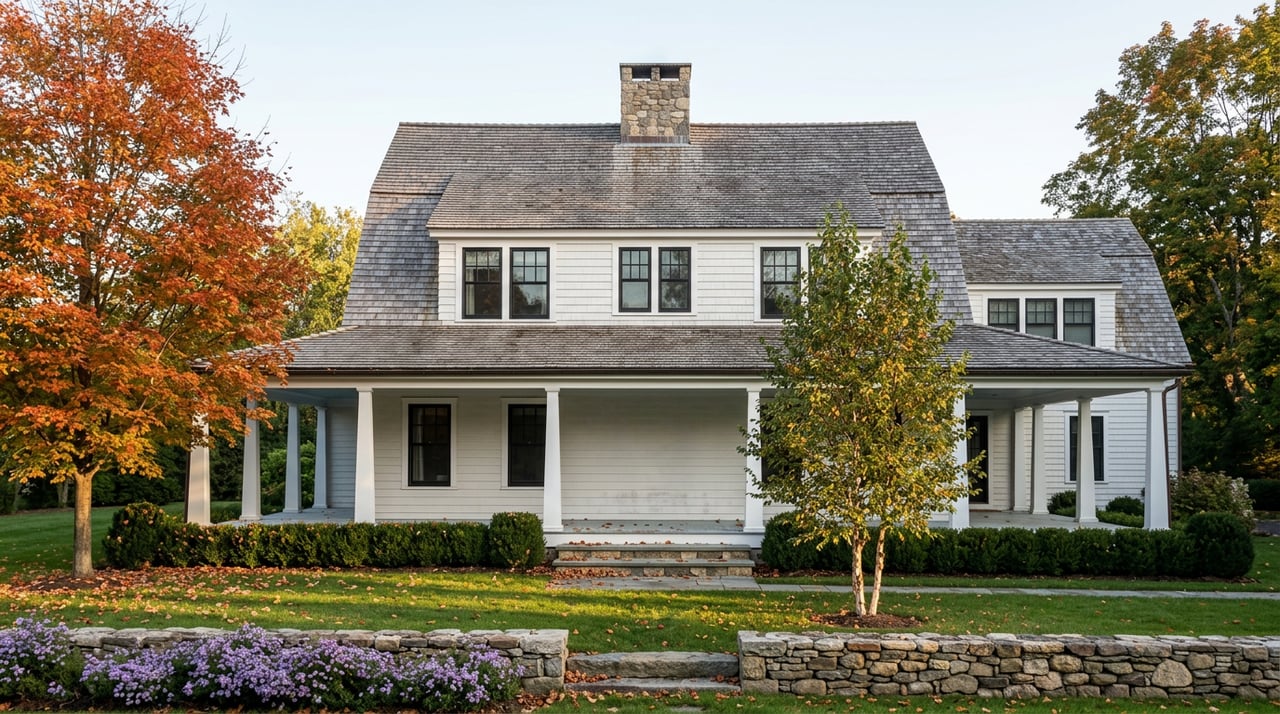
Falmouth’s housing stock is dominated by detached single-family homes. The town reports that 81% of housing units are detached single-family, while less than 10% are in structures with three or more units.
Even so, the housing experience is not identical across locations. The farther you move away from the corridor areas, the more lot size and density can shift.
Foreside Homes and Setting
On the Foreside, homes are often valued for proximity to the water, marine access, and the shoreline setting. Buyers in this area are usually selecting for coastal lifestyle first, with daily convenience and property character shaped around that priority.
This can be especially relevant for second-home buyers or those seeking a seasonal coastal residence. The fit is often about lifestyle alignment rather than just square footage.
Inland Homes and Lot Character
Inland Falmouth includes a wider mix of wooded lots, low-density subdivisions, and some corridor-adjacent multifamily options. Designated residential growth areas allow minimum lot sizes ranging from 20,000 square feet near amenities to 60,000 square feet, while rural-residential districts emphasize lower density.
The town also notes that much of West Falmouth is outside the growth area and not served by public water. That can affect how you think about utilities, maintenance, and long-term ownership needs.
Recent Development Adds More Variety
Recent development in West Falmouth shows that inland Falmouth is not just one housing type. The town cites projects such as Homestead Farms, a 68-unit detached development off Gray Road, and Clover Way, a 20-unit duplex-condominium project nearby.
There is also a 46-apartment mixed-use option approved in the Route 1 South area. For buyers who want proximity to services without being on the Foreside, that corridor-adjacent inventory may deserve a closer look.
Ownership Tradeoffs to Think Through
Both settings offer strong appeal, but they ask different things of you as an owner. The right choice often comes down to which set of tradeoffs feels easier to live with over time.
Foreside Maintenance Considerations
On the Foreside, the major draw is clear: shoreline lifestyle and marine access. But coastal ownership can also bring more exposure to salt, wind, erosion, and wear related to traffic and weather.
The town has already identified storm damage at Town Landing and is studying resiliency upgrades, including raising the grade and relocating facilities to higher ground. For buyers considering waterfront-oriented property, that is a practical reminder that coastal beauty and coastal exposure usually go together.
Inland Maintenance Considerations
Inland ownership often shifts the maintenance equation from shoreline conditions to land care. Instead of focusing on marine exposure, you may be managing larger lawns, wooded areas, driveways, or a property with more self-directed upkeep.
In some areas, utility access may also vary. If you want privacy and space, inland Falmouth can deliver that experience, but it may also require a more hands-on approach to property management.
Resale Often Depends on Buyer Fit
Falmouth remains a high-value and supply-constrained market. The town reports that the median home price rose from $384,500 in 2013 to $925,000 in 2023, and that the 2023 median was 57% higher than Cumberland County’s median.
That does not mean one location is automatically better than the other for resale. Instead, resale tends to depend on how clearly a property matches the priorities of its likely buyer pool.
Who Typically Connects With the Foreside
Foreside properties often resonate with buyers who prioritize boating, shoreline views, marina access, and a more active coastal setting. These buyers may be comfortable with Route 88 and Route 1 traffic if the lifestyle payoff feels worth it.
For a second-home or seasonal buyer, that alignment can be especially important. The appeal is often immediate and experiential.
Who Typically Connects With Inland Falmouth
Inland properties often attract buyers who care most about acreage, wooded buffers, trail access, and a quieter residential rhythm. They may accept more driving or more variable utility access in exchange for privacy and space.
That makes inland Falmouth especially compelling if your idea of luxury is less about activity and more about calm, land, and breathing room.
How to Decide Which Area Fits You
If you are comparing the Foreside and inland Falmouth, start with your routine rather than your wish list. A home can be beautiful in either setting, but the better choice is usually the one that supports how you want to live on ordinary weekdays as well as special weekends.
Ask yourself a few practical questions:
- Do you want daily proximity to boating and shoreline activity?
- Would you rather have trail access, wooded surroundings, and more privacy?
- Are you comfortable with more traffic in exchange for coastal convenience?
- Would you prefer a quieter setting, even if it means more driving?
- Do you want a property with marine exposure, or one with more land to maintain?
For many buyers, the answer becomes clear once those tradeoffs are on the table. In a town shaped by corridors rather than a single center, location is not a minor detail. It is one of the biggest drivers of how your home will feel every day.
If you are considering a primary, seasonal, or second-home purchase in Falmouth, working with a trusted advisor can help you weigh not just the property itself, but the lifestyle fit behind it. To explore Falmouth with a more tailored perspective, connect with Ana T.L. Dierkhising.
FAQs
What is the main lifestyle difference between Falmouth Foreside and inland Falmouth?
- Falmouth Foreside is generally shaped by shoreline access, boating, and a more active corridor setting, while inland Falmouth is more often defined by wooded surroundings, trails, larger parcels, and a quieter residential pace.
Is Falmouth Foreside more walkable than inland Falmouth?
- Falmouth does not have a traditional downtown, and the town describes Route 1 and Route 100 as auto-oriented commercial corridors, so both areas are still largely car-dependent even though the Foreside has concentrated activity near marine access points.
What kinds of homes are common in inland Falmouth?
- Inland Falmouth includes detached homes on wooded or larger lots, low-density subdivisions, and some corridor-adjacent multifamily options, depending on the specific area.
What should buyers know about owning property near Falmouth Foreside?
- Buyers should understand that shoreline-oriented ownership may involve more exposure to salt, wind, erosion, traffic activity, and coastal resiliency concerns.
What should buyers know about living in inland Falmouth?
- Inland living often offers more privacy, trail access, and open space, but it can also mean more driving for errands, more land care, and variable access to public utilities in some areas.
Does one area of Falmouth have better resale potential than the other?
- The research does not show that one area is automatically better for appreciation, but it does indicate that resale is closely tied to the buyer profile each property attracts, such as marine-focused buyers on the Foreside or privacy- and land-oriented buyers inland.