Choosing between a condo and a house in the Richmond District is rarely just about square footage. It is about how you want to live every day, how much upkeep you want to take on, and what kind of privacy and flexibility matter most to you. If you are weighing both options in this part of San Francisco, understanding the local housing mix and lifestyle patterns can make the decision far clearer. Let’s dive in.
Why this choice feels different in the Richmond
The Richmond District is largely residential, with Geary Boulevard and Clement Street serving as its main commercial corridors. It also sits alongside one of San Francisco’s defining lifestyle assets: Golden Gate Park, a 1,017-acre urban park that stretches roughly three miles.
That setting shapes how many buyers experience home life here. In a neighborhood where park access is part of the daily rhythm, the usual condo-versus-house tradeoffs can feel a little different than they would elsewhere.
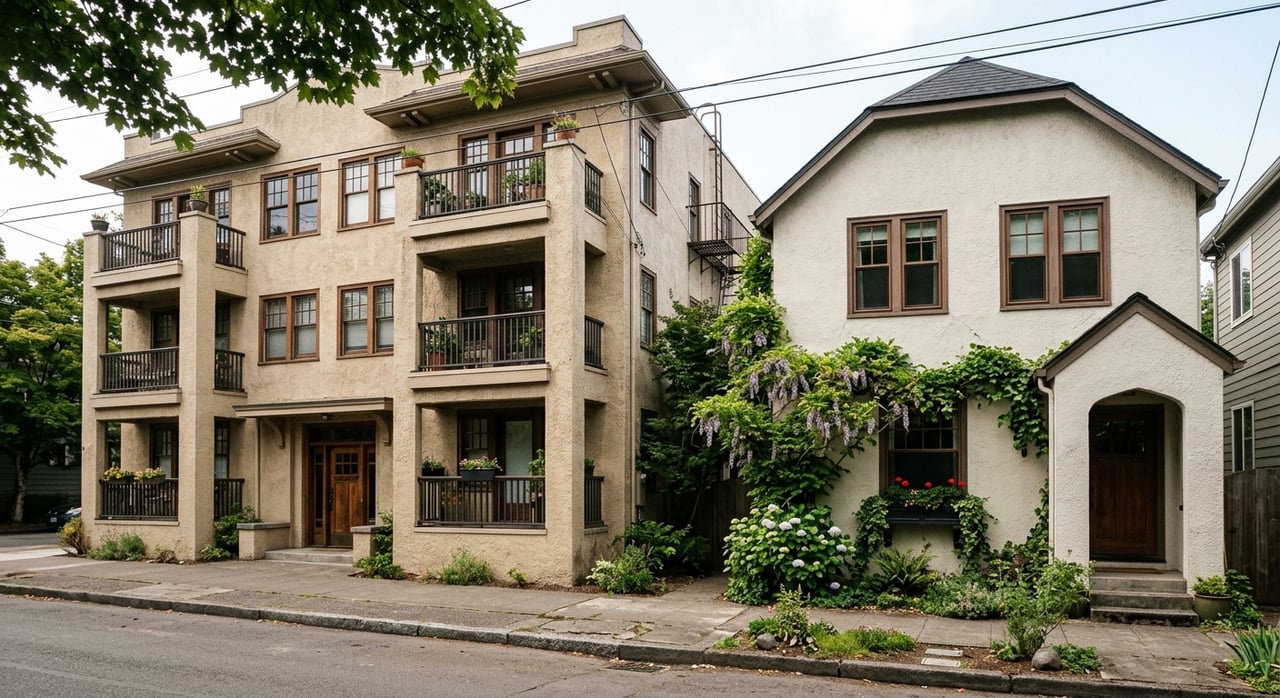
SF Planning’s 2023 Housing Inventory also shows a housing stock that is more small-building-oriented than many buyers expect. Of the Richmond planning district’s 38,493 housing units, 30.5% are single-family homes, while 40.3% are in 2-to-4-unit buildings. That means your choice may often be between a detached house and a unit in a smaller building, not a large new-construction high-rise.
Space and layout tradeoffs
Houses offer more control
If you want maximum control over your space, a house will usually give you more of it. You may have more flexibility around room count, storage, garage space, and private outdoor areas, along with a clearer sense of separation from neighboring homes.
That extra control can matter if your routine needs distinct zones for work, guests, hobbies, or household storage. It can also matter if you want more freedom to shape how the property functions over time.
Condos and TICs often simplify daily living
A condo or TIC often comes with a more compact footprint and some shared spaces. In practical terms, that can work well if you prefer a home that feels easier to manage and maintain.
There is also an important ownership distinction. San Francisco’s Assessor notes that a TIC consists of multiple private units on one parcel with shared common spaces, while condos are legally separated parcels. That legal structure affects how ownership, taxes, and responsibilities are handled.
Park access can offset less private outdoor space
If you spend a lot of time outdoors, a smaller private footprint may not feel as limiting in the Richmond. Golden Gate Park borders the neighborhood, and local planning priorities have emphasized safe access to parks.
That does not replace a backyard, of course. Still, if your daily routine already includes walks, jogging, dog time, or regular outdoor recreation, nearby open space can make a condo or TIC feel much more livable.
Maintenance and responsibility
A house gives independence and full upkeep
Owning a house usually means fewer shared rules and more autonomy. It also means you are generally responsible for the property’s upkeep, repairs, and maintenance decisions.
For some buyers, that independence is a major advantage. For others, it can feel like a larger time and cost commitment than they want to carry.
Condos bring dues and shared governance
With a condo, shared ownership usually comes with shared rules. The California Attorney General states that homeowners associations make and enforce rules for condos and planned communities, and owners typically must join and pay fees and assessments.
The same source notes that CC&Rs and bylaws govern rights and responsibilities, and California’s Davis-Stirling framework covers topics such as finances, maintenance responsibilities, board elections, and dispute resolution. In short, a condo may reduce some hands-on maintenance, but it also asks you to operate within a shared governance structure.
TICs require extra scrutiny
TIC buyers should take particular care in understanding how the ownership structure works. San Francisco’s Assessor states that in a TIC, the entire property remains one parcel, and all co-owners remain responsible for the full property tax bill.
That does not make a TIC better or worse than a condo. It simply means you should review the governing documents, financial arrangements, shared-space responsibilities, and practical expectations very carefully before moving forward.
Parking and transportation routines
Garage access can matter more here
If parking plays a big role in your life, the Richmond’s transit pattern deserves attention. SF Planning’s Existing Conditions Report for District 1 said the area is served by bus only and has no rail service.
That context can make garage access feel more valuable for some households. A house with dedicated garage space may offer a convenience that strongly shapes your daily routine.
Condo buyers should confirm parking details
In a condo or TIC, parking can vary significantly from property to property. If a space is important to you, inspect whether it is deeded, assigned, shared, or subject to building rules.
This is one of those details that can look minor on paper but feel major once you are living there. In the Richmond, where rail service is not part of the neighborhood’s transit picture, that distinction can affect everyday ease.
Which home type fits your lifestyle?
Condo or TIC may fit a lower-maintenance routine
If you live alone, share your home with a partner, or spend long hours away from home, a condo or TIC may align well with your priorities. A smaller footprint can be easier to manage, and shared maintenance structures may appeal if you prefer less direct upkeep.
This can also be a practical fit if your idea of home life centers less on maximizing private square footage and more on having a comfortable, efficient base in a well-loved neighborhood.
A house may better support layered living
If your household needs separate spaces for sleeping, working, hosting, or caregiving, a house may serve you better. Richmond planning goals specifically recognize the need to serve a range of household types, from single-person to multigenerational households.
In practice, larger houses or larger flats often make it easier to create separation between different parts of daily life. That flexibility can become especially valuable as routines shift over time.
Outdoor-focused buyers can think beyond the lot line
Some buyers place enormous value on private outdoor space. Others care more about daily access to open space than about owning a yard itself.
In the Richmond, that distinction matters. If you treat nearby parks and walking routes as part of your home experience, the neighborhood’s edge along Golden Gate Park can make a smaller residence feel more expansive than its floor plan suggests.
A local lens on the decision
The Richmond is not a one-size-fits-all neighborhood, and neither is this decision. Its housing stock, small-building character, and strong connection to park life create a setting where both houses and condos can make excellent sense.
The better question is not which option is more desirable in the abstract. It is which option best supports your actual routine, whether that means more privacy and control, easier maintenance, stronger parking utility, or a lighter-footprint lifestyle with shared amenities and nearby open space.
When you make the decision through that lens, the right fit tends to become clearer.
If you are weighing a condo, TIC, or house in the Richmond District, working with an advisor who understands the nuances of San Francisco housing can make the process far more strategic. For tailored guidance and a thoughtful, principal-led approach, connect with Ana T.L. Dierkhising.
FAQs
What is the main lifestyle difference between a condo and a house in the Richmond District?
- A house usually offers more privacy, space control, storage, and private outdoor area, while a condo or TIC often offers a smaller, easier-to-manage footprint with more shared spaces and rules.
How common are houses versus smaller multi-unit homes in the Richmond District?
- SF Planning reports that 30.5% of housing units in the Richmond planning district are single-family homes, while 40.3% are in 2-to-4-unit buildings.
What should buyers know about condo HOA rules in California?
- The California Attorney General says condo owners usually must join the HOA, pay fees and assessments, and follow governing documents such as CC&Rs and bylaws.
What should buyers know about TIC ownership in San Francisco?
- San Francisco’s Assessor says TICs are multiple private units on one parcel with shared common spaces, and co-owners remain responsible for the full property tax bill.
Why does parking matter when choosing a home in the Richmond District?
- SF Planning’s District 1 report said the area is served by bus only and has no rail service, so garage access or clearly defined parking can have a meaningful effect on daily convenience.
Can Golden Gate Park make condo living feel more workable in the Richmond District?
- Yes. For buyers who spend a lot of time walking, jogging, or enjoying outdoor space, the Richmond’s direct access to Golden Gate Park can help offset having less private outdoor area at home.