Buying a waterfront condo in Portland can feel like stepping into a postcard, but the view is only part of the story. If you are considering a residence along the harbor, on the East End, or near Old Port, you are likely balancing lifestyle, long-term value, and practical ownership questions all at once. The good news is that Portland offers several distinct condo options, each with its own pricing, risk profile, and ownership structure. With the right due diligence, you can buy with far more clarity and confidence. Let’s dive in.
Portland waterfront condo market tiers
Portland’s waterfront condo market is not one single category. In practice, it breaks into three broad groups: true waterfront or working-waterfront condos, East End and Eastern Promenade residences, and downtown or Old Port edge condos.
That difference matters because price, walkability, and exposure to water-related risks can shift meaningfully from one area to the next. In March 2026, Redfin data showed a citywide Portland median sale price of $594,000, compared with $750,000 in the East End, $875,000 in Downtown Portland, and $992,000 in the Waterfront District.
True waterfront and working waterfront
These are the homes most closely tied to Portland’s harbor and port environment. Portland’s zoning map includes Eastern Waterfront layers such as B-6 Eastern Waterfront and EWPZ Eastern Waterfront Port, which reflects how closely this part of the city is linked to marine and port uses.
In this tier, buyers often pay a premium for direct water access, stronger view corridors, and building features that support a lock-and-leave lifestyle. Recent examples at Chandlers Wharf have included private slips, gated access, 24/7 monitoring, and high-end finishes, which helps explain why this segment leads the market on price.
East End and Eastern Promenade
The East End is often the sweet spot for buyers who want water outlook and neighborhood convenience without insisting on direct pier frontage. It offers a more water-adjacent experience, often paired with strong walkability and access to city amenities.
Recent condo data showed a median listing price of $912,000 in the East End, while the broader area posted a median sale price of $750,000 in March 2026. With a Walk Score of 81, this area tends to appeal to buyers who value both the setting and day-to-day ease.
Downtown and Old Port edge
Downtown Portland offers a different version of waterfront living. Here, the premium may come as much from building quality, parking, storage, and finish level as from a direct water view.
Downtown Portland posted a median sale price of $875,000 in March 2026 and a Walk Score of 93. For many buyers, this tier works well if you want to be close to the harbor while prioritizing an easy, urban lifestyle.
What actually drives the premium
In Portland, waterfront condo pricing is usually shaped by a package of features rather than one factor alone. The highest prices tend to combine unobstructed water views with practical building features that make ownership easier.
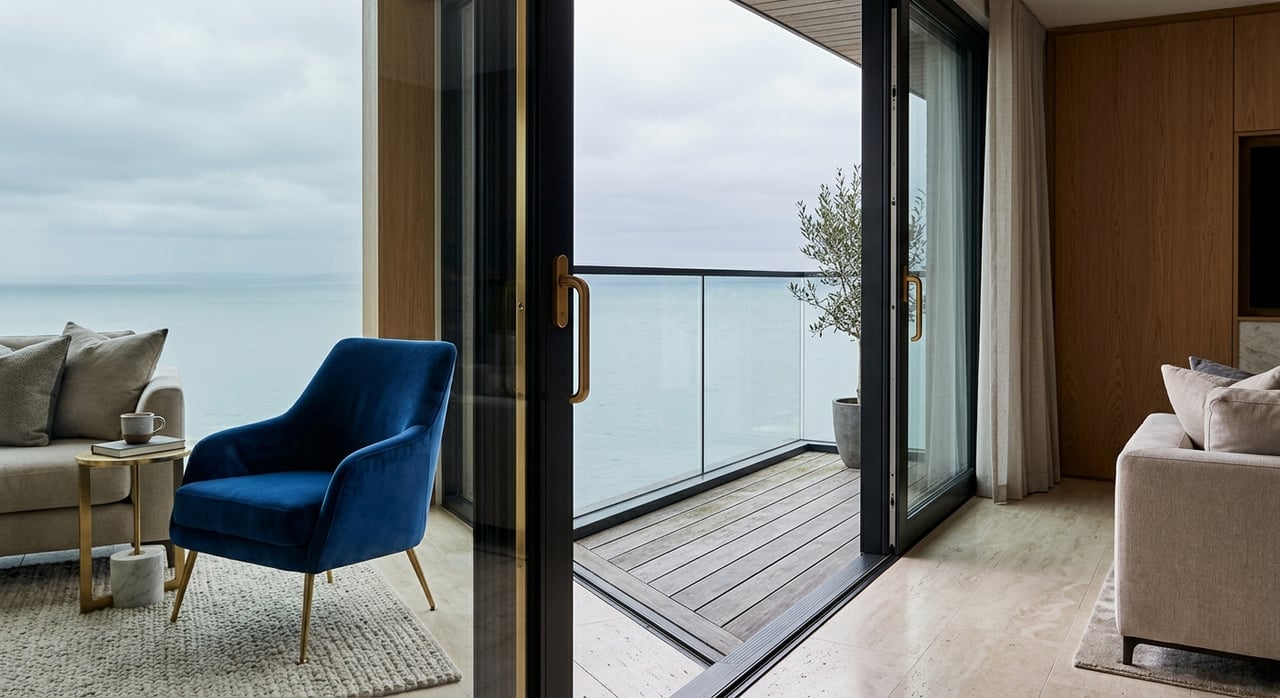
These often include secure parking, elevator access, dedicated storage, newer systems, and a low-maintenance ownership structure. A newer residence such as 99 Federal St may command a premium for floor-to-ceiling Casco Bay views, 10-foot ceilings, and private outdoor space, while older or historic-brick properties can still trade strongly based on character and location.
New construction versus older conversions
Newer buildings can offer cleaner mechanical profiles and more modern amenities, which may reduce near-term maintenance surprises. That said, newer does not automatically mean better value if the association structure or monthly costs are not well matched to the building’s features.
Older waterfront conversions often appeal to buyers who care about architectural character and established locations. In those buildings, it is especially important to understand future capital needs because major exterior and common-area work can become expensive.
View value versus usable value
A spectacular harbor view is important, but it should be supported by the rest of the ownership equation. A condo with strong views, a sound HOA budget, manageable insurance considerations, and well-maintained common elements may prove more compelling over time than the flashiest address alone.
Portland’s Eastern Waterfront planning documents also highlight water views, public access, trail connections, and view corridors as part of redevelopment value. That reinforces a simple point: the setting matters, but so does how well the building supports it.
Review the HOA packet carefully
For a waterfront condo in Portland, the homeowners association is not a side detail. Under the Maine Condominium Act, associations can adopt budgets, collect assessments, maintain reserves, regulate common elements, hire managers, and impose certain charges and fines after notice and an opportunity to be heard.
That makes the HOA document package one of the most important parts of your review. Waterfront buildings can carry expensive shared elements such as elevators, docks, exterior cladding, parking systems, and security infrastructure.
Focus on reserves and assessment history
Maine law requires condo budgets to show the amount reserved for repairs and replacement, other reserves, projected common expense assessments, and monthly assessments by unit type. That gives you a framework for evaluating whether the building appears prepared for future capital needs.
You should also look closely at recent special-assessment history. In Maine, a board may make a special assessment with owner ratification, and an emergency special assessment of up to two months’ common charges may be imposed immediately.
For older associations in particular, the reserve line item and the building’s project schedule can be just as important as the purchase price. If major work is coming, that may affect both your budgeting and your negotiation strategy.
Understand resale disclosures
In a Maine condo resale, the seller must provide the declaration, bylaws, rules, and a current certificate showing the monthly common expense assessment, any unpaid common or special assessments, and other fees. These are core ownership documents, not paperwork to skim at the last minute.
They can help you understand how the building is run, what financial obligations attach to the unit, and whether there are any immediate costs you need to plan for. For a second-home or seasonal buyer, this review is especially important because you may be relying on the building to handle more of the day-to-day ownership burden.
Ask about developer control
If you are looking at a newer project, ask whether the association is still under developer control. Under Maine law, developer control can last up to seven years where development rights exist, or five years otherwise, and it ends no later than 60 days after 75% of units are conveyed.
That does not mean a newer project is a problem. It simply means you should understand who is making decisions today and how governance may change after more units are sold.
Verify flood risk by exact address
One of the biggest mistakes waterfront buyers make is assuming that all Portland waterfront property carries the same flood profile. It does not.
Maine’s flood mapping resources note that the Maine Flood Hazard Map contains the most current digital FIRM maps accepted and approved by FEMA. Portland’s GIS also includes flood-related layers, including 1986 effective flood zones, 2017 advisory flood zones not yet adopted, and a Coastal Flood Resilience Overlay layer.
Why address-level review matters
A condo with a water view may have a different risk profile than one directly on the shoreline. MEMA identifies the FEMA Flood Map Service Center as the official source for flood zones in Maine, and the practical takeaway is simple: verify the exact address rather than rely on neighborhood assumptions.
This matters for financing, insurance, and future resale. It can also affect how you compare two condos that might seem similar at first glance.
Flood insurance is not the same as homeowners insurance
MEMA states that standard homeowners insurance does not cover flood damage. It also notes that flood policies typically take 30 days to become effective and may be required in high-risk Zone A or V areas, or when a federally backed mortgage is involved.
MEMA further notes that nearly one-third of flood claims come from outside high-risk zones. Even if a condo is not obviously on the edge of the water, it is still worth understanding the insurance picture early in your search.
Climate and coastal resilience matter
Coastal flooding in Maine can result from storm surge, high astronomical tides, waves, and sea-level rise. MEMA cites Maine Climate Council planning assumptions of 1.5 feet of sea-level rise by 2050 and 4 feet by 2100.
Model-based property risk tools can also add perspective, even though they are not official flood determinations. For example, Redfin’s Waterfront District page labels the area as having extreme flood risk and severe wind risk, which is a helpful reminder that a beautiful harbor-facing residence may come with real resilience and insurance considerations.
Compare buildings, not just units
When buyers focus only on the interior finishes, they can miss the larger ownership story. In waterfront condo purchases, the building itself often has as much influence on long-term satisfaction as the unit’s floor plan or view.
As you compare options, look at the entire package:
- Reserve funding levels
- Monthly common charges
- Special-assessment history
- Elevator and parking systems
- Storage availability
- Security features
- Exterior condition and projected capital work
- Insurance structure for the association
- Flood exposure by address
A refined purchase decision usually comes from balancing beauty with durability. That is especially true in Portland, where one building may offer direct water access and another may offer a more manageable ownership profile with many of the same lifestyle benefits.
A smart buying approach in Portland
If you are buying a waterfront condo in Portland, it helps to think in layers. First, decide which market tier fits your lifestyle and goals. Then test the unit’s appeal against the building’s finances, common elements, and flood or insurance profile.
For many buyers, the best choice is not the condo with the most dramatic first impression. It is the residence where the view premium, HOA structure, and resilience story all make sense together.
That kind of careful review is particularly valuable for second-home buyers, seasonal owners, and anyone who wants a polished, low-maintenance coastal property without avoidable surprises. If you are weighing Portland’s waterfront options and want principal-level guidance tailored to your goals, Ana T.L. Dierkhising offers a thoughtful, data-informed approach to luxury buying in coastal Maine.
FAQs
What should you review before buying a waterfront condo in Portland?
- You should review the condo association documents, reserve funding, monthly dues, special-assessment history, flood-zone information by exact address, and the line between the association’s insurance and your own coverage.
How much do waterfront condos in Portland cost?
- March 2026 data showed a median sale price of $992,000 in the Waterfront District, compared with $875,000 in Downtown Portland, $750,000 in the East End, and $594,000 citywide in Portland.
Are East End condos considered waterfront in Portland?
- East End condos are generally better described as water-adjacent rather than true direct waterfront, with buyers often paying for water outlook and walkability more than direct pier frontage.
Why do HOA reserves matter in a Portland waterfront condo?
- HOA reserves matter because waterfront buildings may have costly shared components such as elevators, docks, exterior cladding, parking systems, and security features that can lead to larger future expenses.
Do Portland waterfront condos require flood insurance?
- It depends on the exact address, flood zone, and financing, but MEMA notes that flood insurance may be required in high-risk Zone A or V areas or with federally backed mortgages, and standard homeowners insurance does not cover flood damage.
Is downtown Portland or the East End better for a waterfront condo purchase?
- The better fit depends on your priorities, since Downtown Portland offers stronger walkability with a Walk Score of 93, while the East End may appeal if you want a water-adjacent setting with a different price point and a Walk Score of 81.