On the morning of March 14, a handful of volunteers set up a folding table at the Friedman Family Playground and started handing out canvas tote bags. The bags went to anyone who had donated $25 or more to Friends of Alta Plaza Park's playground campaign over the past year. It was a small, almost quaint gesture for a park that most residents pass through several times a week without thinking twice about who keeps it running.
But the tote bag giveaway is the visible tip of a much stranger story about how this particular twelve-acre park actually gets paid for.
The 2026 playground campaign itself is modest on paper. San Francisco Recreation and Parks secured roughly $600,000 in public funding for resurfacing and equipment refurbishment, and the volunteer-run Friends of Alta Plaza Park raised another $80,000 from neighbors to round it out. That is a normal, if slightly underfunded, city parks project. What makes it worth understanding is what happened a year before it, and how much bigger that earlier story is than the one everyone is currently donating tote-bag money toward.
Where the Real Money Came From
As SFist reported, two longtime neighbors died in early 2025 and left money to the park in their wills. William Benjamin Bobo, who lived at 2580 Clay Street, left $3.2 million earmarked for what his will described simply as more benches. Jeanette Ann Goldstein left another $50,000. Combined, that is $3.25 million, more than forty times what the current playground campaign raised from the entire neighborhood over the past year.
Friends of Alta Plaza Park, the volunteer group that has been quietly maintaining this park for decades, is now sitting on a sum of money that dwarfs anything a typical neighborhood parks group manages. Board member Anita Denz told The New Fillmore that the Bobo bequest alone was far more than needed for benches, so the group started thinking bigger. What they landed on is a decade-old blueprint that had been sitting mostly unused: a 2016 site plan drawn up by Miller Company for Rec and Parks that called for moving the playground fence inward and replanting the surrounding beds with Washingtonia filibusta palms and a mix of native and climate-adapted flowering perennials. For nine years that plan existed mostly on paper. Two wills are what may finally move it off the page.
That is the part of this story that generic park write-ups miss. Alta Plaza's upkeep has never run entirely on a city budget line. It runs on a volunteer group that has learned, over and over, to convert individual generosity into infrastructure. The playground resurfacing you will see this year and the palm-lined redesign that may follow are not the same project, and they are not funded from the same pocket.
Two Different Projects, One Park
It is worth separating these two threads, because conflating them leads to the wrong expectations. The $600,000-plus-$80,000 campaign is the one actually underway now: resurfacing and select equipment repair at the Friedman Family Playground, funded and moving. The $3.25 million bequest-funded redesign, the one with palm trees and a relocated fence, has not yet been formally submitted to Rec and Parks. As of the most recent reporting, Friends of Alta Plaza was still working out how to present the wish list.
A park that runs partly on the goodwill of two deceased neighbors is not a lesser resource. It is a more personal one, and it asks something different of the people who use it.
If you are picturing new palms and reworked planting beds by next spring, hold that thought. What you will actually notice sooner is a refreshed play surface and some rebuilt equipment, paid for the ordinary way, with a much larger and more interesting renovation still working its way through a volunteer board's priorities.
The Same Volunteers Are Everywhere Else Too
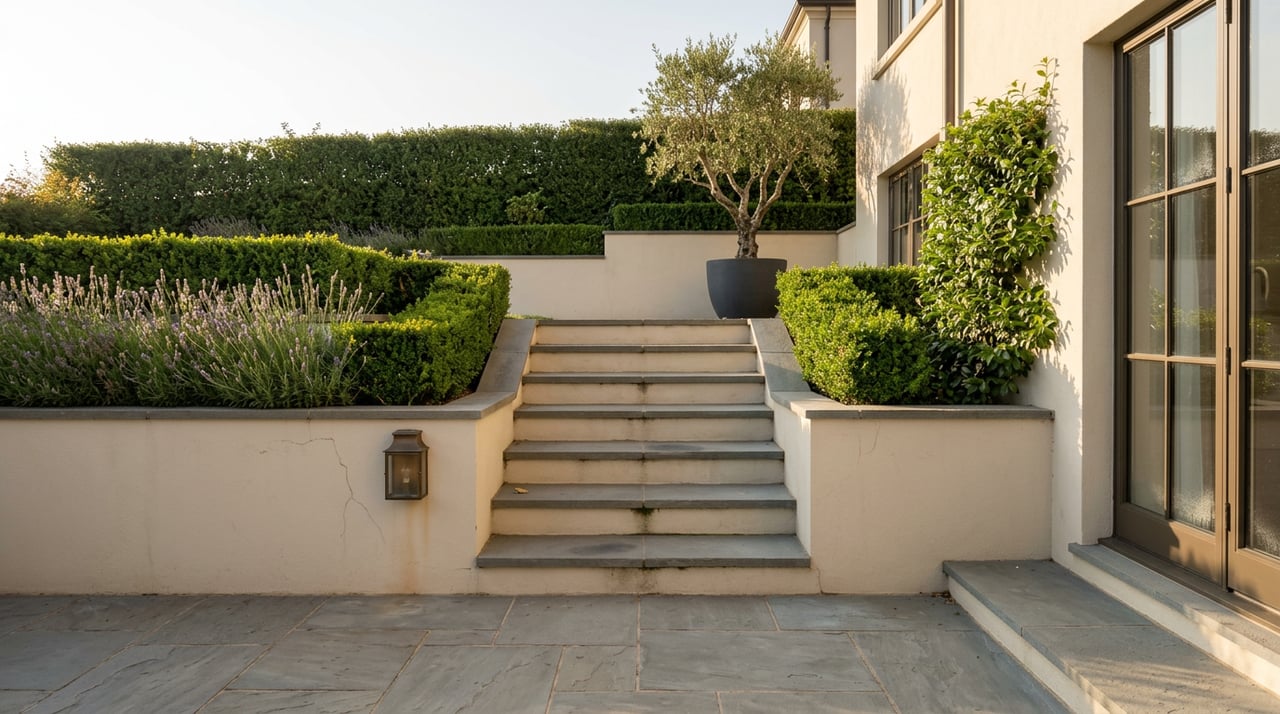
Friends of Alta Plaza is not operating in isolation. The same civic energy shows up across the Pacific Heights Residents Association's calendar. The grand staircase on the park's southern edge, the one still bearing damage from a 1970s film car chase, doubles each year as the starting line for the WalkSF Stair Challenge, a five-mile fundraising route around the city organized by the pedestrian-safety nonprofit WalkSF. This spring, neighbors also turned out for a Cleaning and Greening work day at nearby Lafayette Park, the kind of hands-on morning that keeps a public space presentable between city maintenance cycles.
None of this is unusual for San Francisco parks, which frequently lean on neighborhood associations to bridge gaps in city funding. What is unusual is the scale at which it happened here in the span of a single year, moving from a modest annual fundraising drive to stewardship of a seven-figure bequest almost overnight.
What's Filling In Around the Park
The same stretch of blocks around Alta Plaza has had its own quieter turnover this year, separate from the park story but part of the same neighborhood rhythm.
- Maria Isabel, the Mexican-focused follow-up from Dalida's Laura and Sayat Ozyilmaz, opened in Pacific Heights in February, giving the couple their second San Francisco restaurant.
- A Korean barbecue concept from the chef behind Michelin-starred SSAL is set to take over the former Noosh space on Upper Fillmore this fall.
- HYOU Fine Jewelry, a newer Fillmore Street retailer, recently hosted a private styling event for the Pacific Heights Residents Association, showcasing curated looks for members.
None of these openings depend on park funding or bequests. But they are threading through the same few blocks at the same time, which means a resident walking from the grand staircase down toward Fillmore this fall will pass a park mid-renovation, a Mexican restaurant already a few months in, and a Korean barbecue spot just getting its doors open, all within about a ten-minute walk.
What This Actually Tells You
The lesson in all of this is not really about benches or palm trees. It is about how a park like Alta Plaza actually stays maintained in a neighborhood like Pacific Heights. The public funding is real but comparatively small. The volunteer fundraising is steady but modest. The money that actually changes a park's shape tends to arrive the way it did in 2025, through the personal decisions of people who spent decades living beside the park and decided, at the end, to put their names on its next chapter.
That matters if you already live here, because it means the park's future is being shaped less by a city budget hearing and more by the same informal network of neighbors who show up to hand out tote bags, walk the stair challenge, and pull weeds at Lafayette Park on a Saturday morning. It is a small, specific example of how this particular pocket of San Francisco tends to solve its own problems, one bequest, one work day, one styling event at a time.
If you are curious about what else is changing in the blocks around Alta Plaza, or you want a longer conversation about this part of Pacific Heights from someone who tracks it closely, Ana T.L. Dierkhising is happy to talk. Let's Connect.