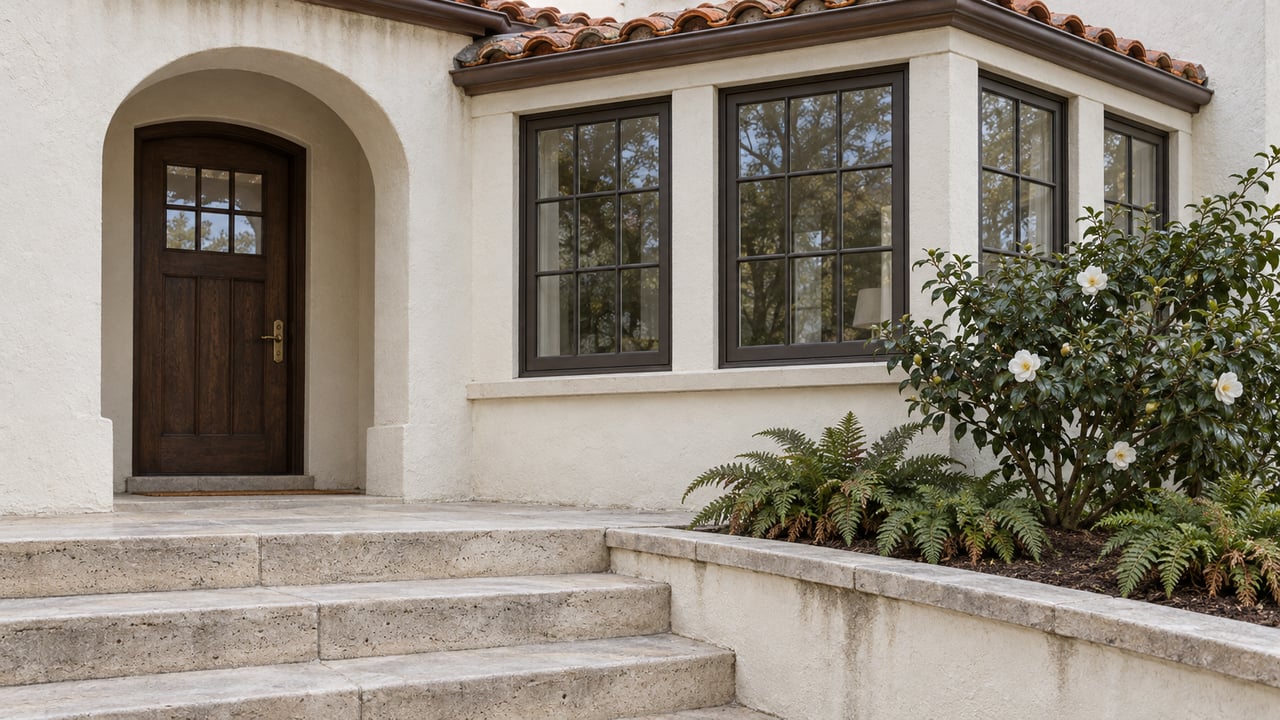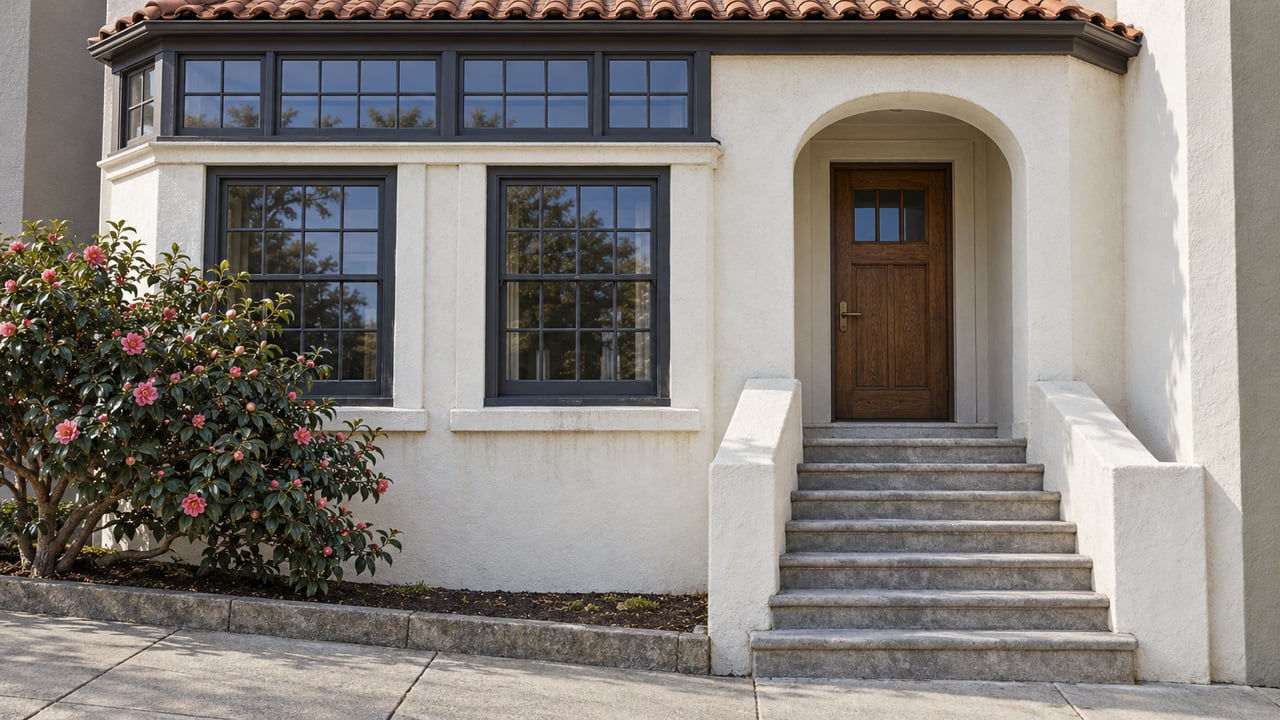
On October 13, the modern house at 2833 Vallejo Street in Pacific Heights closed at $19.4 million. It had been listed at $20 million, and The Real Deal described it as on and off the market for about a year. Nine days later, around the corner in Presidio Heights, a midcentury house at 20 Cherry Street closed at $28.5 million. It had been listed at $18.5 million on October 2. The San Francisco Chronicle reported it as the largest dollar overbid in the city's history.
Both houses are in the north side's top tier, yet the asking price ended up on opposite sides of the sale price. Anyone shopping Pacific Heights this winter will run into the same thing. A list price here is the seller's estimate of how many buyers can write the check. Where that pool is deep, the number works as a starting bid. Where it narrows to a handful of people, the number is closer to a ceiling.
Below the high teens, the list price is an opening bid
The Bay Area habit of pricing low has a name. In July the San Francisco Chronicle called it "price-to-entice," where sellers set prices artificially low to draw more competition. In a normal year that adds a few hundred thousand dollars. From January through June 2026, more than 140 San Francisco homes sold for at least $1 million over asking, 44 of them in June alone, according to Compass data the Chronicle cited. In the same period a year earlier, eight homes did.
On the Presidio Wall, the results this year had little to do with the list prices. 3140 Pacific Avenue, with its forest views toward the Presidio, was listed at $7.495 million and closed quickly at $12 million this summer. According to Hoodline, 3460 Clay Street in Presidio Heights was listed at $11 million and closed at $14.7 million within 21 days, and 120 Cherry Street was listed on September 21 and closed less than four weeks later at $17.15 million. That works out to about $2,780 per square foot, against a three-month neighborhood median of $1,970.
Apartments followed the same pattern. A full-floor co-op residence on the ninth floor of 2500 Steiner Street, a 1920s Mediterranean Gothic Revival building, was listed at $16 million in late August and sold in October for $17.2 million, The Real Deal reported. That is $4,920 per square foot, above what the city's most expensive mansions have been bringing.
Some of these sellers did not mean to start a bidding war. In an October piece, The Real Deal found north-side agents saying they had been pricing low without intending to, and that overbids were expected but their size could no longer be predicted. Supply explains most of it. The San Francisco Standard reported that September brought the fewest new listings since 2020, while sales above $5 million rose 109% year over year. Fewer homes and more buyers who can pay cash will push prices past any list price set from last year's comparables.
At $20 million and up, there are far fewer buyers
Pacific Heights' north slope sold differently. 2830 Pacific Avenue, a Georgian Colonial on a street-to-street triple lot, was first listed at $35 million in 2023. It was relisted at $27.5 million in April 2025, came off the market in the fall, and returned at the end of March 2026. It went into contract within a week and closed April 27 at exactly $27.5 million, a year after that price was set, the San Francisco Standard reported. The price stayed the same and the market rose to meet it.
2315 Broadway, a Queen Anne Victorian on its first sale in nearly 60 years, was listed at $25 million on May 7. Public records put the closing at $22.2 million on June 10, all cash. As The Real Deal reported, the buyer agreed to pay both sides of the broker commission and the real estate transfer tax, which brought the all-in cost to about $25 million. In this tier, the seller and buyer can settle on terms that never appear in the public record.
Then there is 2833 Vallejo at $19.4 million, and 2090 Vallejo, a 1919 house of roughly 9,650 square feet with Bay views, an elevator and a wine cellar. It was listed at $25 million in mid-September and sold in early November for $19.5 million, nearly 22% below asking, according to The Real Deal. At the very top, the biggest Vallejo Street trade of the year, the Beaux Arts mansion at 2898 Vallejo, sold off-market in April for $56 million. That one had no public asking price at all.
Price per square foot shows why. 2833 Vallejo closed at about $3,140 per square foot. 2090 Vallejo closed at $2,025, well under the per-foot price at 120 Cherry. Measured by the foot, 2090 Vallejo was the cheaper house. Its total price is what limited the bidding. Every added million in the total cuts the number of households that can write the check, and the ones left have time and alternatives, including deals that never reach the open market.
Money arriving now is mostly cash, and that is why the split shows up so clearly. The Chronicle reported that about 79% of San Francisco homes selling above $7 million had no mortgage at closing through September 1, 2026. Average 30-year mortgage rates went back above 7% in October, but that has had little effect at these prices. What limits the bidding is how many people hold the liquidity.
November moved the line down a little
The past few weeks suggest the point where bidding stops has slipped below $20 million. On November 12, 3385 Jackson Street in Presidio Heights, a 6,835-square-foot house, sold for its exact list price of $18.8 million. The Real Deal grouped it with 2090 Vallejo and with Russian Hill's 1281 Greenwich Street, which sold at its $19.5 million ask after 117 days. The outlet treated the three sales as a possible cooling of the overbid run. It also noted that 87% of San Francisco homes sold above asking in the third quarter, and that September's average sale was 131% of list.
Through the third quarter, the broad middle of the luxury market was still competing hard for very few listings. The late-fall sales at or under asking are concentrated in the high teens and above, where the cash pool is thinnest. A Compass market report quoted in The Real Deal described the year as reversing San Francisco's usual pattern, with luxury rather than entry-level homes drawing the bidding wars. The November sales show where that reversal stops.
The supply of new buyers is also less certain than many headlines suggest. In mid-October the San Francisco Standard reported that the dates of the big AI public listings were not set, and that OpenAI had pushed its listing to 2027. Much of the IPO wealth people expect has not yet been paid out, and at $25 million a few buyers more or less changes the outcome.
Applying this to a listing this winter
For a house listed around $8 million to $17 million on the Presidio Wall or the flats of Pacific Heights, assume the asking price is where the negotiation begins. The sales above show that the clearing price can sit 30% to 60% higher, and the result depends on how many cash buyers are watching that week. A pre-approval sized to the list price will not be enough. The real question is what that particular house is worth to you before the bids start.
For a house listed above roughly $20 million on Broadway, Vallejo or Pacific Avenue, the asking price is more likely to be the most anyone will pay than the least. In this tier, how long a house has been on the market, and whether it has been relisted, tells you more than the per-foot price. 2830 Pacific and 2833 Vallejo were both on and off the market for about a year. At this level, terms like who pays the transfer tax and commissions can be part of the deal.
Full-floor co-op residences like the one at 2500 Steiner follow their own pattern, and that sale's per-foot price ran past the mansions nearby. Our Pacific Heights neighborhood page and the neighboring Presidio Heights page cover the streets behind these sales, and the market update follows the citywide numbers month to month.
Questions buyers are asking this season
Do Pacific Heights homes still sell over asking in late 2026? Most of the homes listed below the high teens that closed this fall went over asking, some by millions. The sales at or under asking in October and November were all near or above $19 million.
Why would a seller underprice a $10 million house? Some do it to draw competition, the practice the Chronicle calls price-to-entice. Others aimed for market value and ended up low because demand rose faster than the comparable sales they priced from.
Are off-market sales common at the top of Pacific Heights? They happen. The year's largest sale on Vallejo Street, 2898 Vallejo at $56 million in April, never came to the open market. Ana's practice includes access to Compass Private Exclusives.
Whether a list price is a floor or a ceiling depends on the house and the buyers in its price range. Before you write an offer on a Pacific Heights or Presidio Heights home this winter, Ana T.L. Dierkhising can go through recent closings near that address, along with how long each was listed and on what terms, so your number reflects how that price tier is trading. Let's Connect.